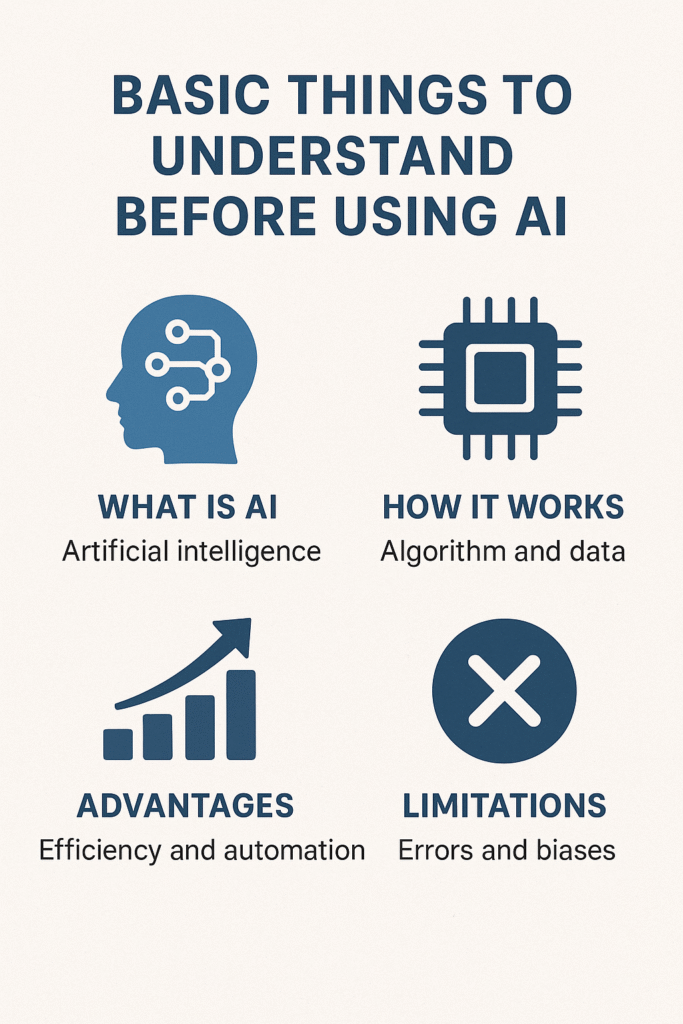
What is AI and How Does It Work?
Artificial Intelligence (AI) is a branch of computer science focused on creating machines capable of simulating human intelligence processes. This encompasses a variety of functions, including learning, reasoning, problem-solving, perception, and language understanding. AI can be categorized into two main types: narrow AI and general AI. Narrow AI is designed to perform specific tasks, such as facial recognition and language translation, and it excels within those defined areas. Conversely, general AI refers to a theoretical construct where machines possess the ability to perform any intellectual task that a human can do, showcasing a broader and more versatile capability.
To grasp the functioning of AI systems, it is essential to understand several core concepts. One of the most significant is machine learning, a technology within AI that enables systems to learn from data and improve their performance over time without being explicitly programmed for each task. Machine learning models are trained on datasets, allowing them to recognize patterns and make predictions based on new, unseen data. Within this field, deep learning further enhances machine learning through the use of neural networks, which are designed to mimic the human brain’s structure. These networks consist of multiple layers that process information, allowing systems to handle complex tasks like image and speech recognition.
The application of AI spans various sectors, from healthcare and finance to transportation and entertainment. By leveraging data and sophisticated algorithms, AI systems can automate processes, enhance decision-making, and provide insights that were previously unattainable. Thus, a firm understanding of AI, its definitions, and its mechanisms is crucial for anyone looking to engage with or utilize these technologies effectively in various fields.
The Importance of Data in AI
Data serves as the foundational element for artificial intelligence (AI) systems, playing a significant role in their development, performance, and overall efficacy. In essence, AI thrives on data; it learns patterns and makes decisions based on the information it is provided. The types of data utilized can vary widely, encompassing structured data, such as databases filled with numerical values or categories, unstructured data, including text, images, and videos, and semi-structured data that incorporates elements from both categories. Each type of data contributes uniquely to the learning processes of an AI system.
The quality and quantity of data are paramount in ensuring that AI systems function effectively. High-quality data must be accurately labeled and representative of the problem space; any inconsistencies or inaccuracies can lead to skewed results and unreliable outputs. Additionally, having a substantial amount of data enhances the system’s learning capability, allowing it to draw more meaningful insights and predictions. Conversely, insufficient data can result in underfitting, where the AI fails to capture the complexity of the task it is designed to perform.
To harness the full potential of AI, a meticulous data collection process must be established, including the steps of gathering, cleaning, and preprocessing the data. This process eliminates errors, addresses discrepancies, and ensures that the dataset is suitable for analysis. Moreover, awareness regarding biased data is critical. AI systems trained on biased datasets can produce discriminatory outcomes, highlighting the necessity for ethical data usage. Maintaining a commitment to fairness and accuracy not only enhances performance but also fosters trust in AI applications. Understanding the importance of data in AI is essential for effective utilization in any project that seeks to leverage this transformative technology.
Common Applications of AI
Artificial Intelligence (AI) has permeated various industries, transforming traditional practices and offering innovative solutions to age-old problems. One of the most notable sectors embracing AI is healthcare. Here, AI algorithms assist in diagnosing diseases by analyzing medical images, predicting patient outcomes, and even personalizing treatment plans based on individual genetic information. This not only enhances diagnostic accuracy but also allows for more efficient patient management, ultimately improving overall healthcare delivery.
In the finance sector, AI plays a pivotal role in risk assessment and fraud detection. Financial institutions utilize AI technologies to analyze transaction patterns and identify anomalies that may indicate fraudulent activities. Additionally, AI-driven analytics help in predicting market trends, enabling banks and investors to make well-informed decisions. This heightened capability leads to better investment strategies and a reduction in financial losses.
Marketing has also experienced a significant shift thanks to AI applications. Businesses leverage AI tools for customer segmentation, targeting, and personalized marketing campaigns. By analyzing consumer data, AI can determine preferences and behaviors, allowing companies to tailor their strategies effectively. This not only boosts customer engagement but also enhances conversion rates, showcasing the considerable return on investment offered by AI integration.
Lastly, the entertainment industry is reaping the benefits of AI technology as well. From content recommendation systems utilized by streaming services to AI-generated music and art, the creative possibilities are expanding. Content creators harness AI to understand audience preferences and enhance user experiences, resulting in more engaging and relevant content.
Across these sectors, AI is not just a tool; it is reshaping the way organizations operate, leading to increased efficiency and improved decision-making capabilities. As such, the potential impact of AI application resonates beyond mere technology, influencing diverse aspects of business and daily life.
Ethical Considerations and Challenges of AI
The advancement of artificial intelligence (AI) technology brings with it a host of ethical implications and challenges that are essential for stakeholders to consider. Central to these concerns is the issue of privacy. As AI systems increasingly rely on vast amounts of data to function effectively, the risk of violating individual privacy grows. This data often includes sensitive personal information, raising questions about how it is collected, stored, and utilized. Ensuring that privacy rights are preserved while still enabling AI innovation is a critical challenge that developers and regulators must navigate.
Another significant ethical consideration is security. AI systems can be susceptible to breaches or manipulations, which could lead to harmful consequences. The potential for malicious use of AI technologies, such as in autonomous weapons or surveillance systems, further complicates the ethical landscape. It is essential to address the security vulnerabilities inherent in AI systems to protect both users and society at large from potential threats.
Accountability is yet another pressing issue in the ethical discourse surrounding AI. When AI systems make autonomous decisions, determining who is responsible for the consequences of those decisions can become ambiguous. This lack of accountability could lead to significant legal and ethical dilemmas, particularly in scenarios involving harm or loss. Establishing clear guidelines regarding accountability in AI deployment is essential to ensure responsible use.
Furthermore, the potential for job displacement due to AI automation raises socio-economic concerns. As machines increasingly take over tasks traditionally performed by humans, the workforce may face significant upheaval. It is vital for policymakers and business leaders to consider the implications of AI for employment and to develop strategies that support workforce transition and reskilling.
Given these numerous challenges, establishing frameworks for responsible AI usage is imperative. Stakeholders—including developers, users, and regulators—must engage in critical discussions surrounding the ethical dimensions of AI to foster a balanced approach to its deployment. Through collaboration, it is possible to navigate these challenges while harnessing the benefits of AI technology responsibly.