DevOps is a culture and set of practices that bridges software development (Dev) and IT operations (Ops) to deliver better software faster and more reliably. It emphasizes collaboration, automation, and continuous improvement across teams.
Here’s I will present a beginner-friendly guide to help you understand DevOps step by step:
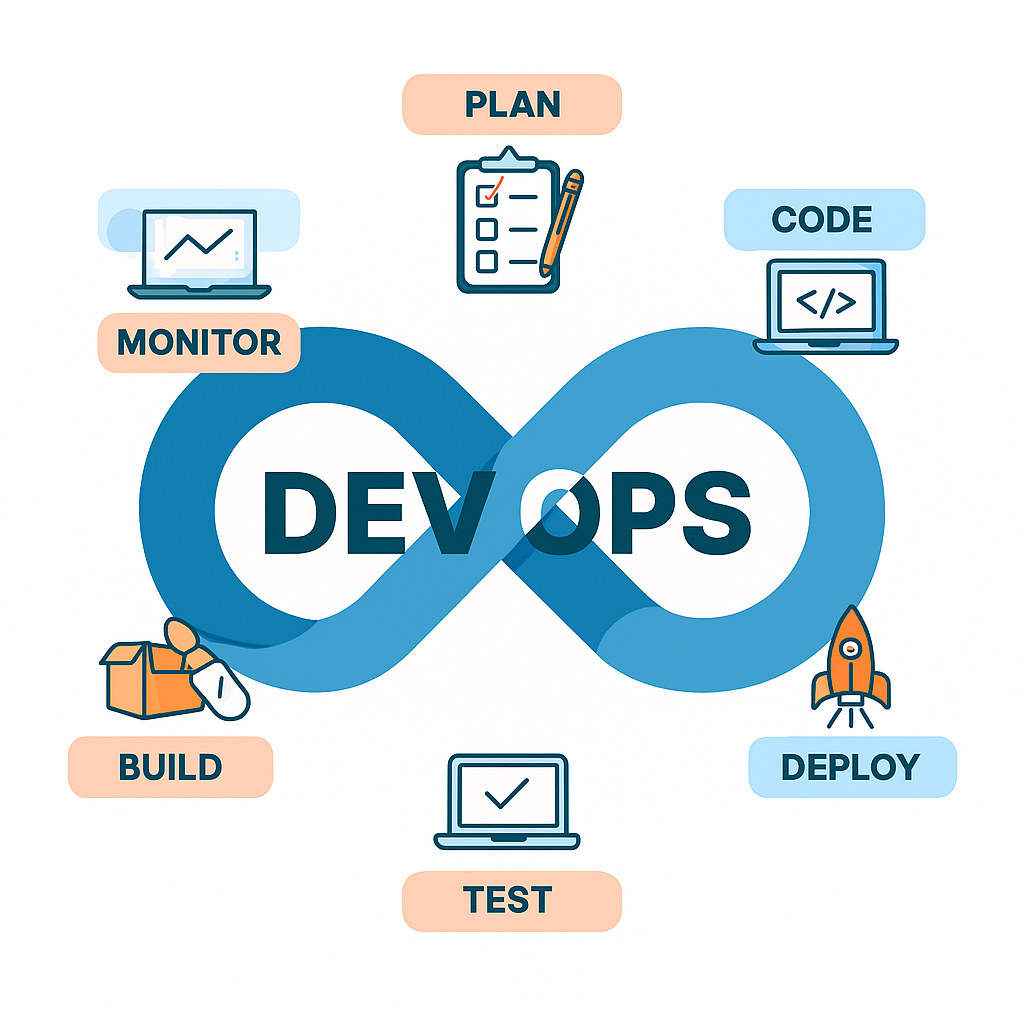
Why DevOps Matters
- Faster delivery of features and updates
- Fewer bugs and smoother deployments
- Better collaboration between teams
- Improved customer satisfaction through reliable software
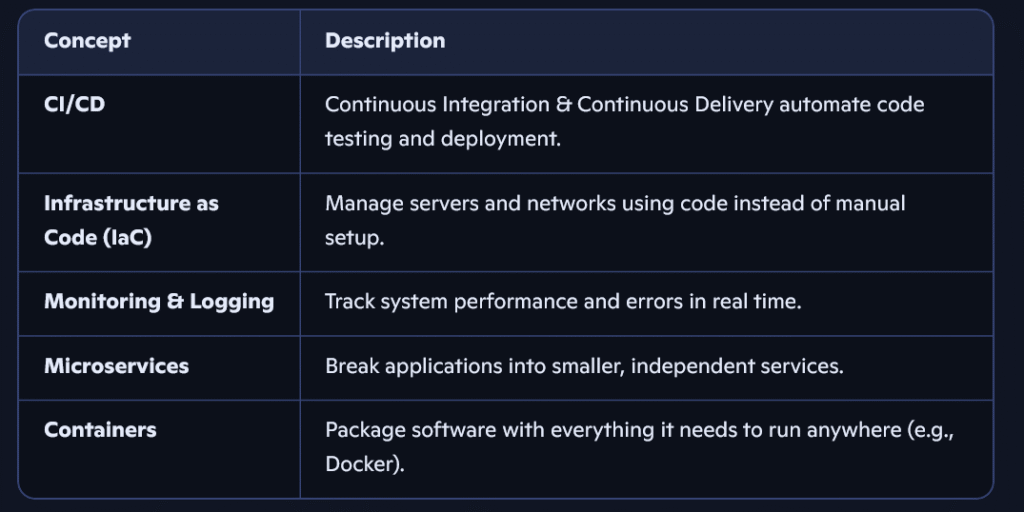
Core Concepts of DevOps
DevOps Lifecycle (Simplified)
- Plan – Define features and goals.
- Develop – Write code collaboratively.
- Build – Compile and test code automatically.
- Test – Run automated tests to catch bugs early.
- Release – Deploy code to production safely.
- Monitor – Track performance and fix issues.
- Feedback – Learn from users and improve.
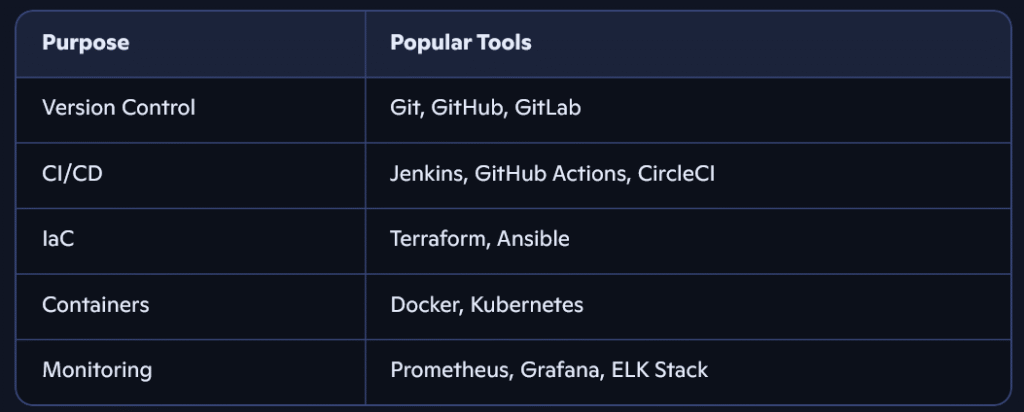
Tools You’ll Encounter
Your DevOps Learning Roadmap
Below is a step-by-step path to get started:
- Understand the Basics
- Learn what DevOps is and why it matters.
- Understand Agile and Lean methodologies.
2. Learn Git & Version Control
- Use Git to track code changes.
- Practice with GitHub or GitLab.
3. Explore CI/CD
- Learn how to automate testing and deployment.
- Build a simple CI/CD pipeline using GitHub Actions or Jenkins.
4. Get Hands-On with Containers
- Install Docker and containerize a simple app.
- Learn about Dockerfiles, images, and containers
5. Dive into Kubernetes
- Understand how to orchestrate containers.
- Deploy a multi-container app using Kubernetes.
6. Try Infrastructure as Code
- Use Terraform to provision cloud resources.
- Learn how to write and apply IaC scripts.
7. Set Up Monitoring & Logging
- Use Prometheus and Grafana to monitor your app.
- Explore log management with the ELK stack.
Sample Project: Your First DevOps Pipeline
Here’s a simple project idea to practice:
- Create a To-Do App (in Python, Node.js, or any language).
- Push Code to GitHub.
- Set Up CI/CD with GitHub Actions to:
- Run tests on every push.
- Build a Docker image.
- Deploy to a cloud service (like Heroku or AWS).
- Monitor the app using a basic logging tool.
Recommended Resources
- 📖 The Phoenix Project by Gene Kim – A novel about DevOps in action.
- 🎓 freeCodeCamp – Free tutorials on Git, Docker, and CI/CD.
- 📺 YouTube Channels – TechWorld with Nana, The Net Ninja, and DevOps Toolkit.
- 🧑🤝🧑 Communities – Join Reddit’s r/devops, Dev.to, or Discord servers
DevOps is a journey, not a destination. Start small, stay curious, and keep building. The more you practice, the more confident you’ll become. And remember: DevOps is about people and culture just as much as it is about tools and automation.